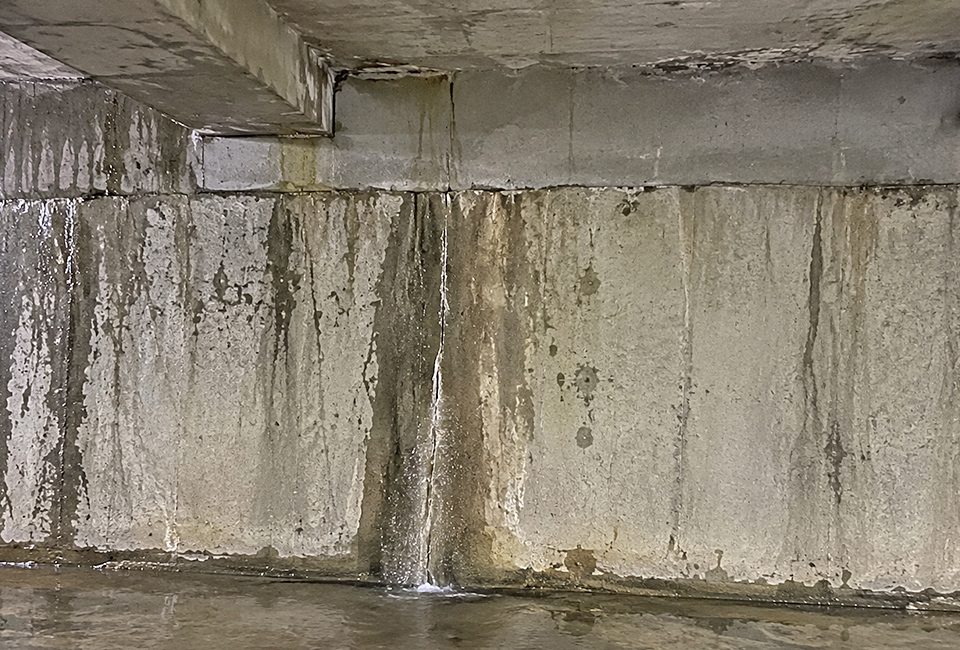


Water is one of the main factors contributing to the deterioration of concrete structures. Although this material is often considered extremely strong and durable, its natural porosity allows moisture to penetrate the cement matrix, especially when cracks, improperly sealed joints, or suboptimal construction details are present.
Water infiltration does not merely cause aesthetic problems such as moisture stains or salt efflorescence. Over time, it can compromise the durability of the entire structure, leading to corrosion of the steel reinforcement, loss of concrete cover, increased cracking, and a progressive decline in the concrete’s mechanical performance.
For this reason , waterproofing must be considered an integral part of the design and construction of any structure, whether civil or industrial. Taking preventive action reduces the risk of future water infiltration, minimizes maintenance requirements, and significantly extends the structure’s service life.
Today, there are numerous technologies available for waterproofing concrete. Choosing the most suitable solution depends on several factors: the type of structure, the stage of the project (new construction or an existing building), the presence of pressurized water, environmental conditions, and the characteristics of the construction details. Before delving into techniques and products, it may be helpful to understand why waterproofing has become an increasingly important element in the design and maintenance of civil engineering projects. We addressed this topic in the article dedicated to the importance of waterproofing structures in the era of climate change.
In this guide, we’ll analyze the main waterproofing techniques, the most common mistakes to avoid, and the solutions that enable the construction of safer, more reliable, and longer-lasting structures.