• + 39.02.57602651
  • info@proind.it
logo Proindlogo Proindlogo Proindlogo Proind
  • Company
  • Certifications
  • Product
    • Release agents and adjuvants
    • Waterproofing products
    • Anti-shrinkage cement mortars
    • Corrosion control products
    • Professional accessories for construction
    • Special technical products
  • Product guide
  • Applications on site
  • Blog
  • Contacts
0
English
  • Italian
Carbonatazione del calcestruzzo
Concrete carbonation: causes, damage to reinforcement and solutions to prevent it
May 12, 2026

Repairing damaged concrete: how to deal with deteriorated structures and rusted reinforcement bars

calcestruzzo ammalorato

Repair of damaged concrete: a technical guide to effective and long-lasting repairs

The deterioration of reinforced concrete is a common problem in the construction industry, particularly in structures that are exposed over time to moisture, atmospheric agents, chlorides or carbonation. When these phenomena begin to compromise the protection of the steel reinforcement, cracks, spalling of the concrete cover, rusting of the steel and a loss of structural performance may occur.

Taking the correct action on deteriorated concrete allows the structure’s functionality to be restored, further damage to be prevented and its service life to be significantly extended.

But what are the correct steps to take? And what technical solutions can help prevent further corrosion?
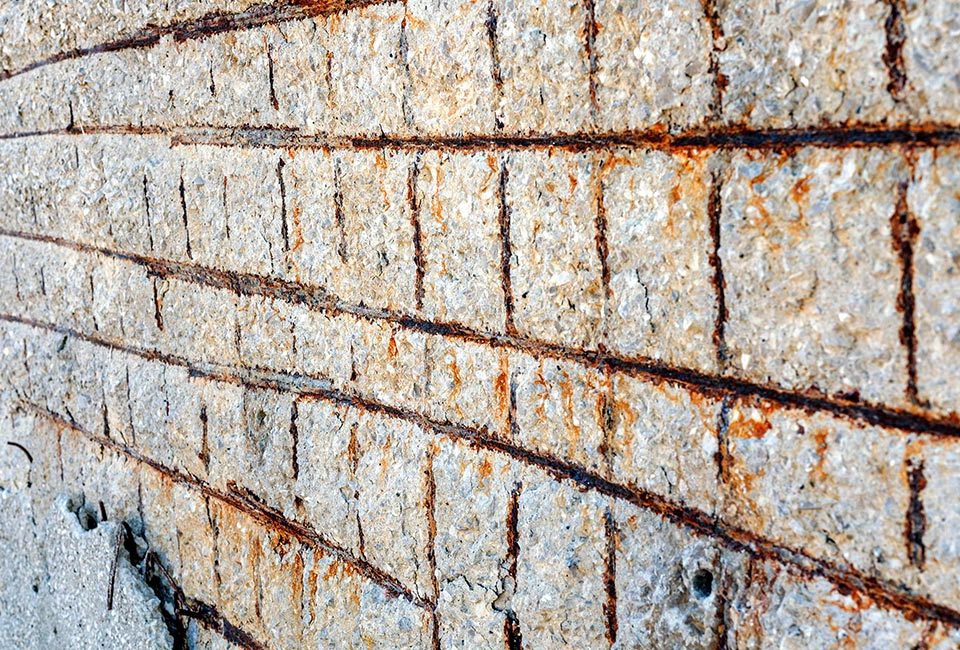
When is a reinforced concrete structure in a state of disrepair?

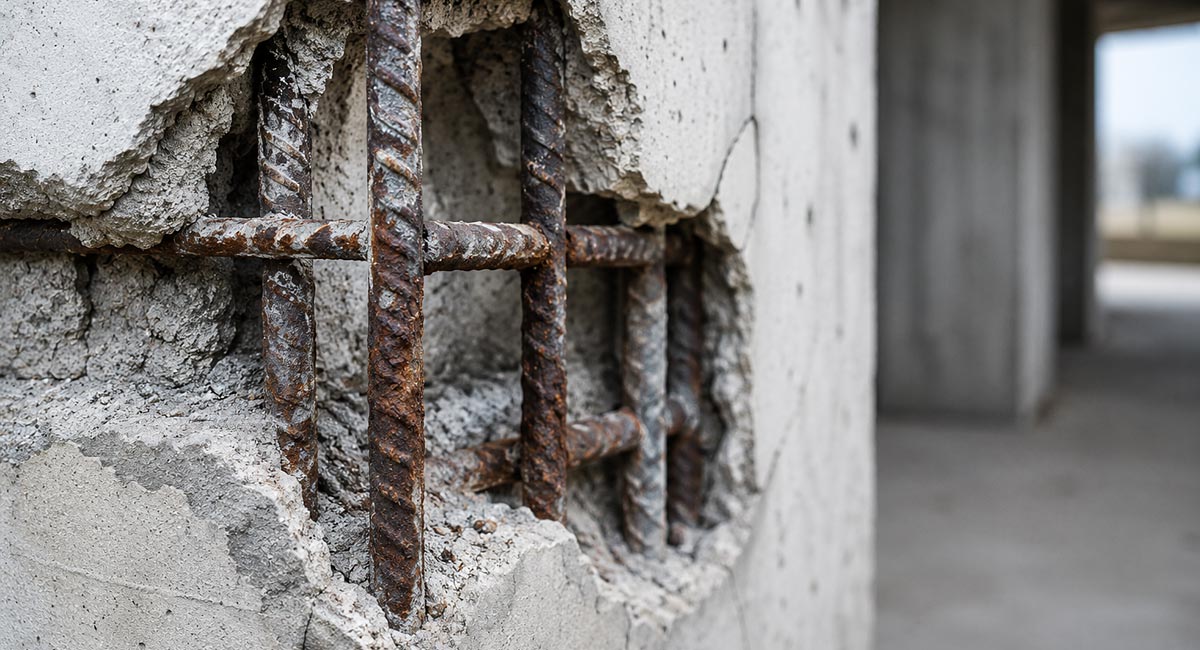
A structure may be considered to be in a state of disrepair when it shows clear signs of surface or structural deterioration.

The most common signs include:

  • cracks in the concrete cover;
  • spalling;
  • exposed reinforcement;
  • presence of surface oxidation;
  • water ingress;
  • loss of concrete compactness.

These phenomena may occur in:

  • residential buildings;
  • balconies and parapets;
  • multi-storey car parks;
  • prefabricated buildings;
  • industrial structures;
  • infrastructure works.
Carbonatazione del calcestruzzo

The main causes of concrete deterioration

The deterioration of reinforced concrete can be caused by a number of factors.

Among the most common are:

  • carbonation of concrete;
  • chloride penetration;
  • persistent damp;
  • freeze-thaw cycles;
  • aggressive chemicals;
  • installation errors or insufficient concrete cover.

When these agents reach the reinforcement, the steel loses its natural passivation and the corrosion process begins.
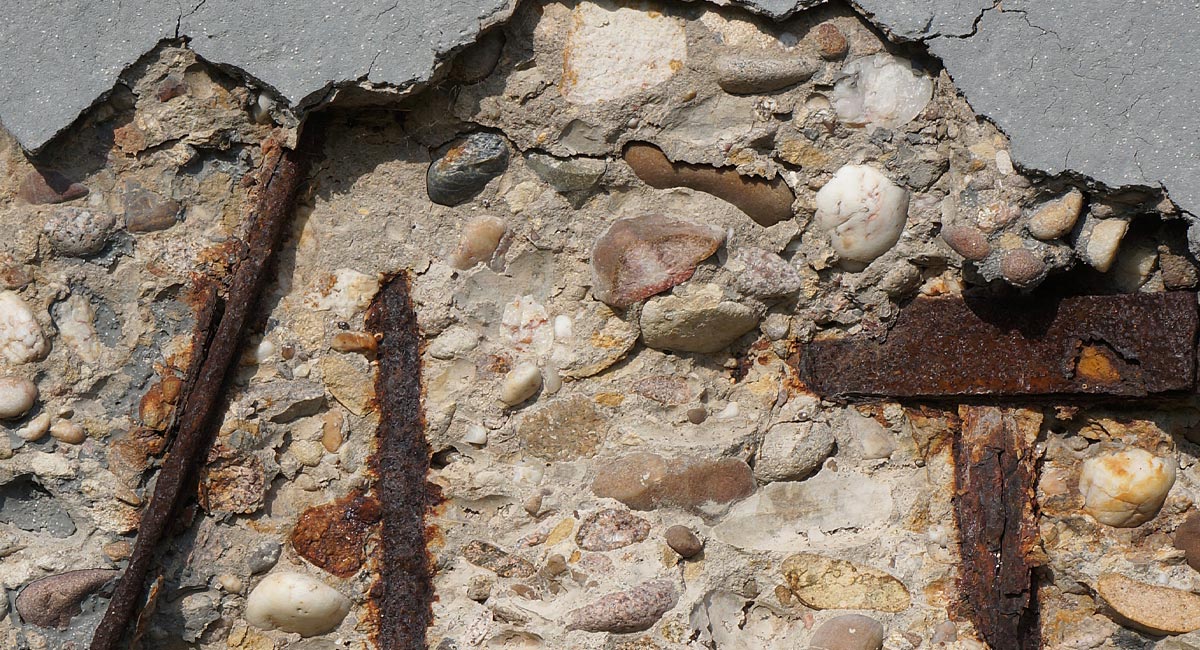
Oxidation causes the metal to expand, generating internal stresses that lead to cracks and spalling of the concrete.

The stages of repairing damaged concrete

To ensure the procedure is truly effective, it is important to follow a precise technical procedure.

1. Removal of degraded material

The first stage involves removing any loose or detached sections until a sound, structurally sound substrate is reached.
This process enables the affected areas to be correctly identified and the surface to be prepared for the next stage of treatment.

2. Cleaning of metal fittings

Once on display, the armour must be thoroughly cleaned to remove rust, dust and debris.
Proper preparation of the metal is essential to ensure the effectiveness of subsequent protective treatments.

3. Corrosion protection of structures

MCI 2005After cleaning, it is essential to halt or slow down the corrosion process.
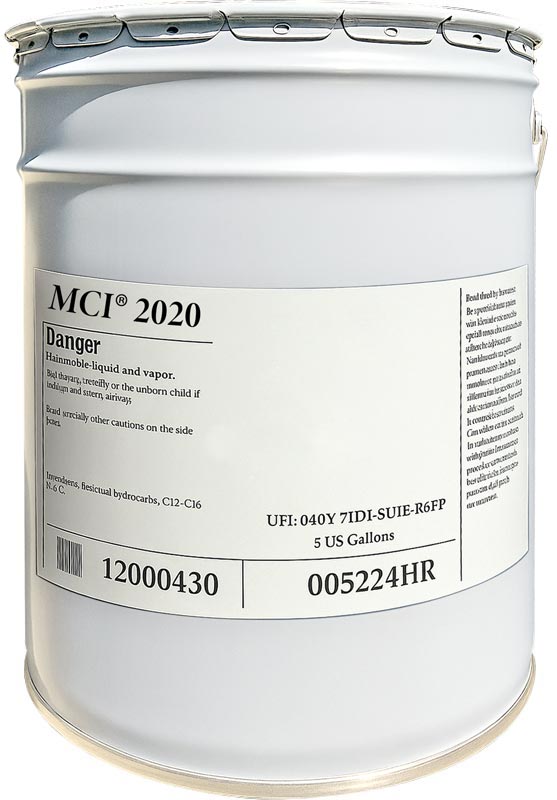
For existing structures, an effective technical solution is MCI 2020, designed to penetrate deep into the concrete until it reaches the reinforcement, protecting it from corrosion caused by carbonation, chlorides and moisture.

This treatment is suitable for:

  • balconies;
  • facades;
  • car parks;
  • prefabricated buildings;
  • industrial structures;
  • infrastructure.

4. Reconstruction of the damaged areas

Once the reinforcement has been secured, the degraded areas are repaired using specialised mortars suitable for structural restoration.

The objective is:

  • to rebuild the concrete cover;
  • to restore structural continuity;
  • to ensure durability and long-term adhesion.

The choice of repair material must always be compatible with the existing substrate.

How to prevent further deterioration

Once the issue has been resolved, it is essential to take preventive measures to ensure it does not recur.

Protection during new construction or additional concrete pouring

MCI 2005

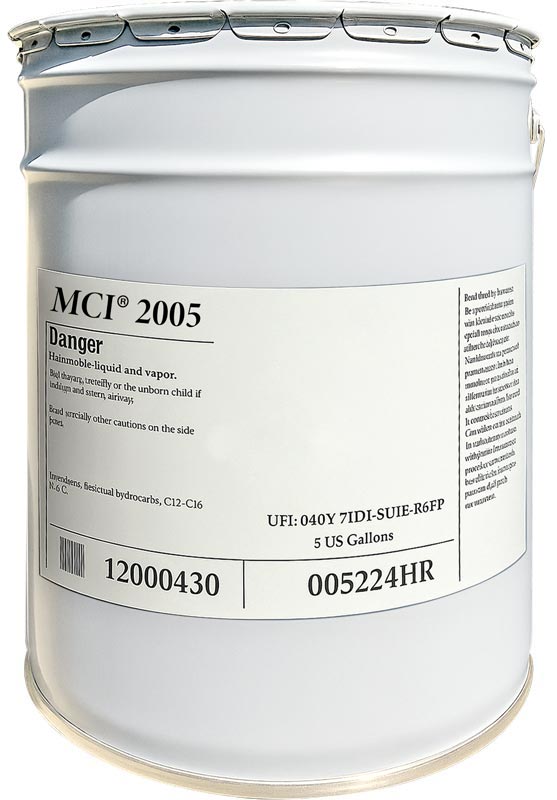
During new construction or structural retrofitting works, it is possible to protect the reinforcement directly using MCI 2005.

This migratory additive creates an internal protective barrier against:

    • carbonation;
    • chlorides;
    • moisture;
    • aggressive environmental agents.

It is particularly suitable for: prefabrication, bridges and viaducts, car parks, industrial structures and marine environments.

Protection of complementary metal components

In some restoration projects, it may also be necessary to protect external metal elements or ancillary structural components.

Metal surface treatment

MCI 2005

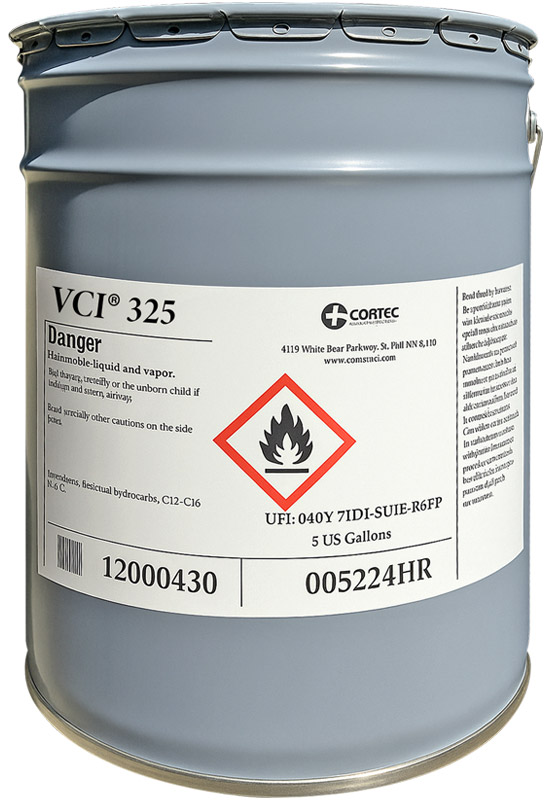
In such cases, VCI 325 can be used; it is formulated to provide corrosion protection for metal surfaces exposed to aggressive or damp environments.

This solution can be used in:

  • metal structural work;
  • supporting elements;
  • industrial structures;
  • metal accessory components.

Why act promptly

Delaying repair work can lead to more extensive damage and higher maintenance costs.

Taking action in the early stages of deterioration allows you to:

  • limit the extent of the damaged areas;
  • reduce future repair costs;
  • preserve structural safety;
  • extend the service life of the structure;
  • avoid invasive interventions.

Conclusion

The repair of deteriorated concrete requires a technical approach, a correct sequence of operations and the use of specific professional solutions.

Thanks to technologies developed by Proind, such as MCI 2020, MCI 2005 and VCI 325, it is possible to take effective action in both the preventive protection and maintenance of reinforced concrete structures.

Work carried out correctly today means greater safety, lower maintenance costs and structures that last longer.

Would you like a free consultation for your project?

Contact us to identify the most suitable protection strategy for your structure: whether it is a new construction, maintenance work or a temporary protection requirement, we have the tailor-made solution.

CONTACT US
Share
0

Related posts

Carbonatazione del calcestruzzo
May 12, 2026

Concrete carbonation: causes, damage to reinforcement and solutions to prevent it


Dettagli
Cemento armato
February 25, 2026

Disarming: essential solutions for efficient, high-quality construction


Dettagli
Precast
February 25, 2026

Precast materials: solutions for high-quality prefabrication


Dettagli

© 2024 PROIND SRL - P.IVA: 04084490152 - All Rights Reserved.
Via Fornace Cavallino 13/15 - 20073 Opera (Milano) - Italy

Tel.: +39.02.57602651 - Fax: + 39.02.5760635 - E-mail: info@proind.it

Privacy

    0English
    • Italian
    • English