• + 39.02.57602651
  • info@proind.it
logo Proindlogo Proindlogo Proindlogo Proind
  • Proind: the Leading Company in Building Products
  • Proind: Certifications
  • Prodotti
    • Release agents and adjuvants for concrete and mortar
    • Waterproofing products with high technological content
    • Lime-based anti-shrinkage cement mortars
    • Corrosion control products with high chemical resistance
    • Professional accessories for construction
    • Special technical products for the building industry
  • Proind product guide for precast and construction site applications
  • Applications on site
  • Blog Proind: innovation and technology for modern construction
  • Building Technology Products: Proind Contacts
0
English
  • Italian
Pompe per disarmanti
Pumps for formwork release agents: how to improve application and concrete quality
May 20, 2026

Chlorides in concrete: causes of corrosion and solutions

Cloruri nel calcestruzzo

Chlorides in concrete: how they accelerate the corrosion of reinforcement

Reinforced concrete is designed to ensure strength and durability over time, but certain environmental conditions can compromise the natural protection of the steel reinforcement. Among the main factors contributing to structural deterioration is the presence of chlorides in concrete, one of the most common causes of steel corrosion in building and infrastructure works.

Bridges, multi-storey car parks, industrial structures, prefabricated buildings and structures in marine environments are often exposed to this phenomenon. Understanding how chlorides act and what preventive measures to take is essential for preserving the safety, durability and value of structures.
What are chlorides and why do they pose a risk?

Chlorides are chemical compounds that can penetrate concrete via water, moisture or exposure to aggressive environments.

The most common sources of chloride contamination include:

  • marine or coastal environments;
  • brackish water;
  • de-icing salts used in winter;
  • aggressive industrial atmospheres;
  • water ingress in exposed structures.

Under normal conditions, the high alkalinity of concrete naturally protects the steel reinforcement. When the chloride concentration exceeds a certain threshold, this protection is compromised and the corrosion process can begin.

Cloruri-nel-calcestruzzo-2

How chlorides attack metal reinforcement

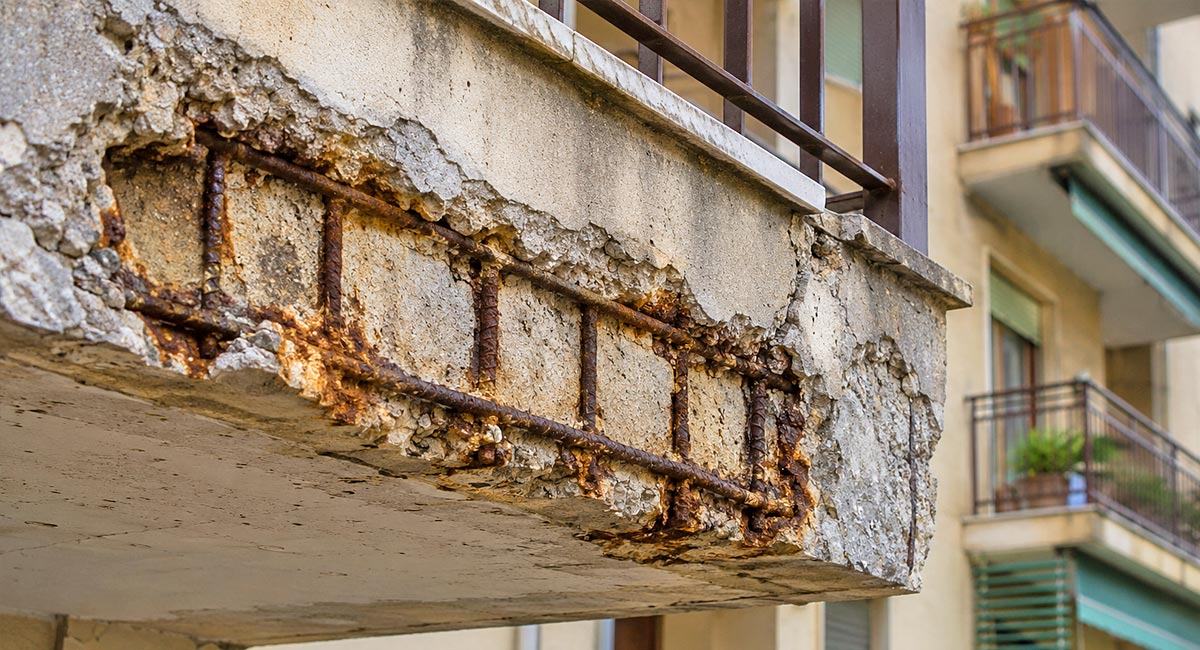
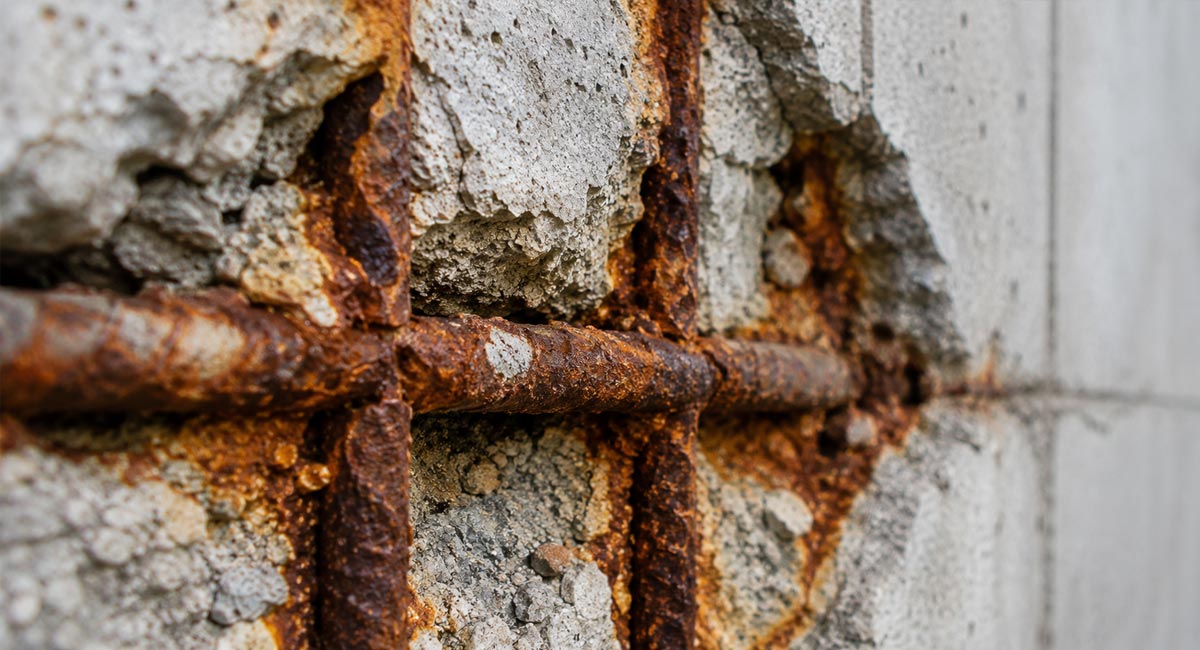
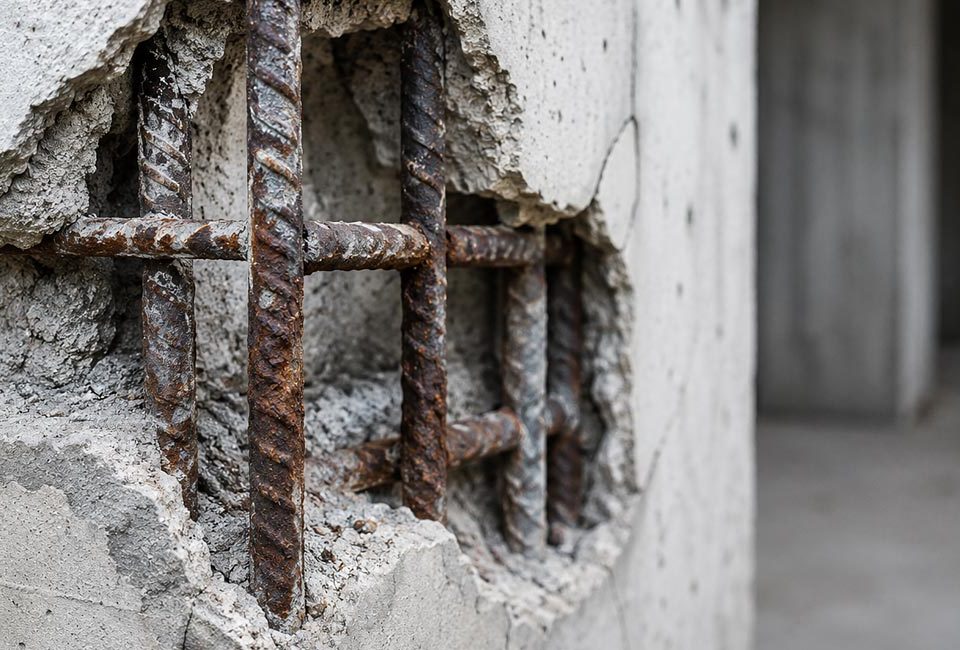
When chlorides reach the reinforcing bars, they break down the passivation film that naturally protects the metal within the concrete.

From that point onwards, localised corrosion can develop, which is often highly aggressive.

The main consequences can be:

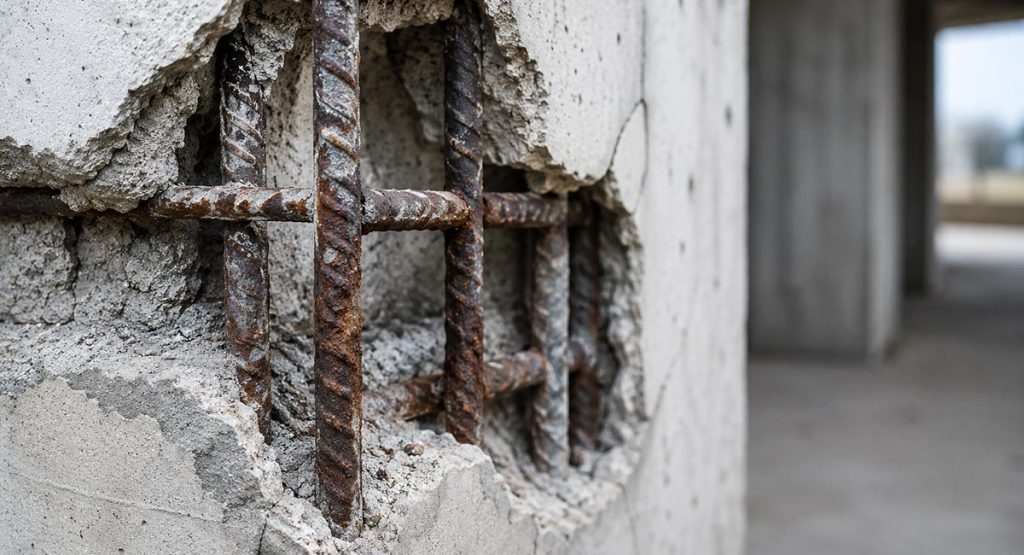
  • rust formation on the reinforcement;
  • increase in volume of the oxidised steel;
  • internal stresses in the concrete cover;
  • appearance of cracks;
  • spalling of the concrete surface;
  • loss of structural capacity.

One of the most critical aspects is that chloride corrosion can develop internally over a long period without any obvious signs on the surface.

Which facilities are most at risk?

Chloride contamination primarily affects structures exposed to particularly aggressive environments.

Among the most vulnerable structures are:

  • bridges and viaducts;
  • multi-storey car parks;
  • port facilities;
  • industrial prefabricated buildings;
  • production facilities;
  • buildings in coastal areas;
  • structures exposed to de-icing salts.

In these contexts, prevention becomes essential.

How to prevent chloride corrosion

Prevention is the most effective strategy for extending the service life of reinforced concrete structures.

Protection during new construction

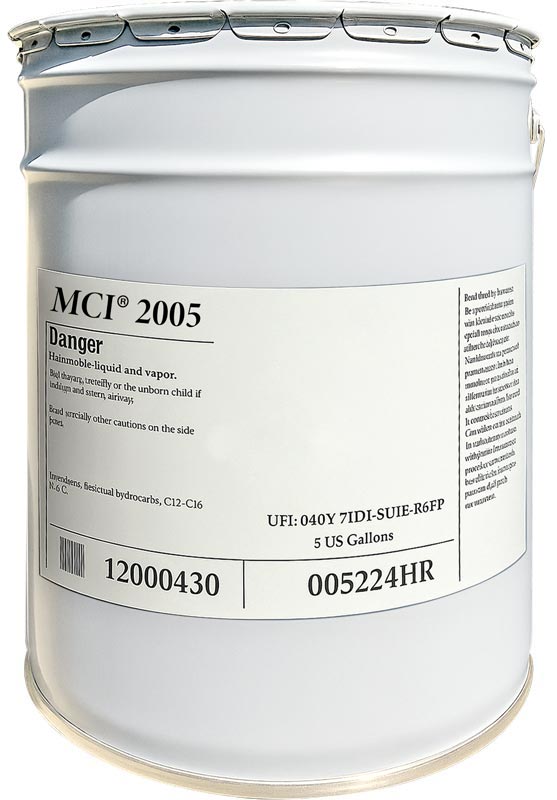
MCI 2005When casting new concrete or constructing structural works exposed to harsh environmental conditions, it is possible to protect the reinforcement directly by incorporating specific anti-corrosion systems into the concrete.
An effective technical solution is MCI 2005, designed to protect reinforcement against corrosion caused by chlorides, carbonation and aggressive environmental agents.

This additive is used in:

  • prefabrication;
  • infrastructure projects;
  • car parks;
  • bridges;
  • industrial projects;
  • marine environments.

The use of a migratory additive significantly increases the durability of reinforced concrete.

Protection of existing structures

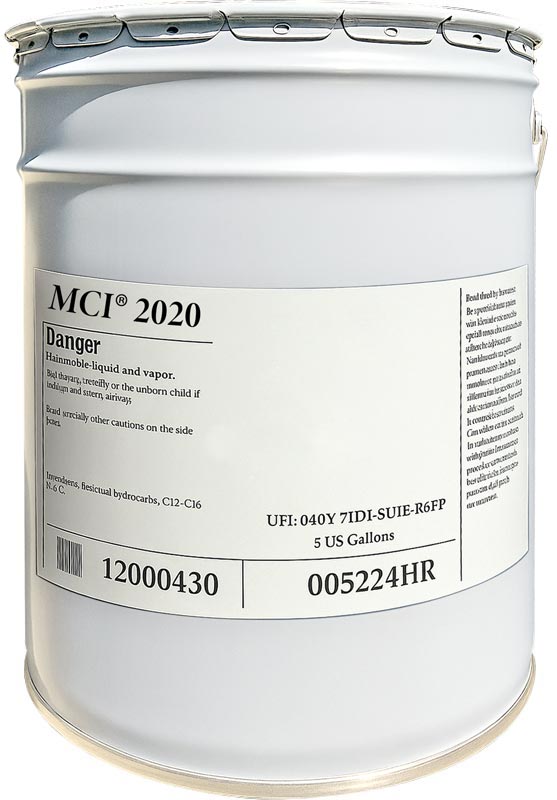
MCI 2005Even existing structures can be protected using specific surface treatments.
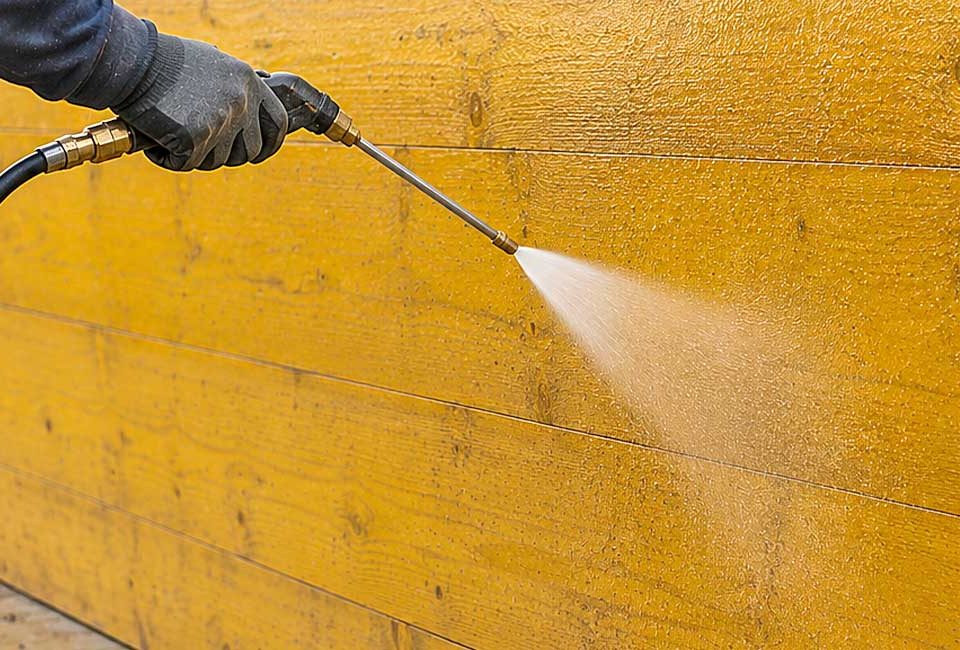
MCI 2020 is a solution designed to penetrate deep into the concrete until it reaches the steel reinforcement, helping to slow down corrosion that has already begun or to prevent it from starting.

This treatment is ideal for:

  • balconies;
  • facades;
  • prefabricated buildings;
  • car parks;
  • infrastructure exposed to the elements.

Signs that should not be overlooked

In the presence of chlorides, certain signs may indicate that a corrosive process is underway:

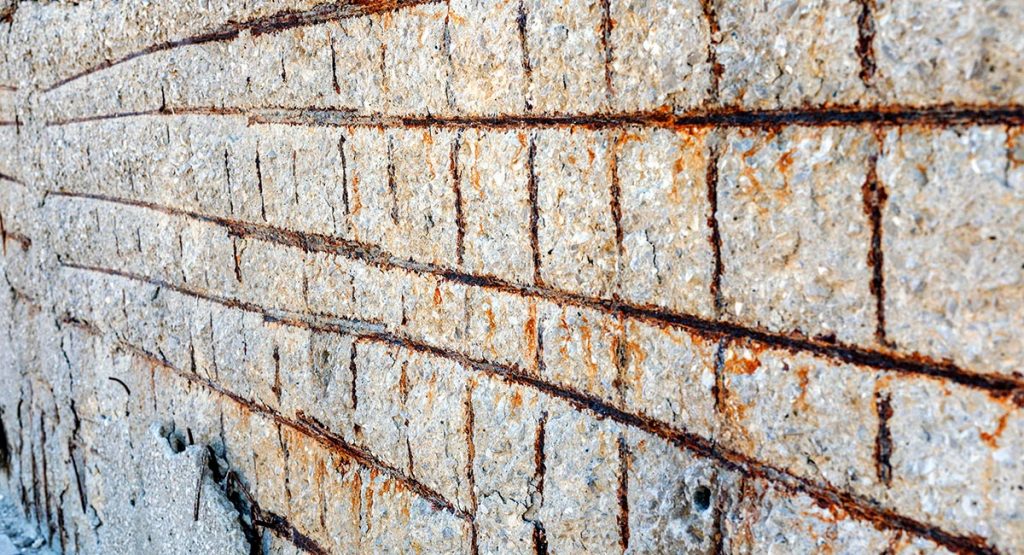
  • longitudinal cracks along the reinforcement;
  • oxidation stains;
  • spalling of the concrete cover;
  • persistent water ingress;
  • localised surface deterioration.

Taking prompt action helps to limit repair costs and preserve structural safety.

Why prevention reduces maintenance costs

For structures exposed to harsh environments, prevention is far less costly than restoration.

Implementing protective measures at an early stage allows you to:

  • extend the service life of the structure;
  • reduce the need for extraordinary maintenance;
  • minimise operational downtime;
  • maintain mechanical performance;
  • protect the investment in the long term.

Conclusion

The presence of chlorides in concrete is one of the main causes of corrosion in steel reinforcement, particularly in structures exposed to aggressive environments or de-icing salts.

Understanding this phenomenon and implementing specific protective systems makes it possible to prevent structural damage, reduce maintenance costs and increase the durability of structures.

Thanks to the technical solutions developed by Proind, such as MCI 2005 and MCI 2020, it is now possible to effectively protect both new buildings and existing structures.

Would you like a free consultation for your project?

Contact us to identify the most suitable protection strategy for your structure: whether it is a new construction, maintenance work or a temporary protection requirement, we have the tailor-made solution.

CONTACT US
Share
0

Related posts

Pompe per disarmanti
May 20, 2026

Pumps for formwork release agents: how to improve application and concrete quality


Dettagli
calcestruzzo ammalorato
May 13, 2026

Repairing damaged concrete: how to deal with deteriorated structures and rusted reinforcement bars


Dettagli
Carbonatazione del calcestruzzo
May 12, 2026

Concrete carbonation: causes, damage to reinforcement and solutions to prevent it


Dettagli

© 2024 PROIND SRL - P.IVA: 04084490152 - All Rights Reserved.
Via Fornace Cavallino 13/15 - 20073 Opera (Milano) - Italy

Tel.: +39.02.57602651 - Fax: + 39.02.5760635 - E-mail: info@proind.it

Privacy

    0English
    • Italian
    • English