• + 39.02.57602651
  • info@proind.it
logo Proindlogo Proindlogo Proindlogo Proind
  • Company
  • Certifications
  • Product
    • Release agents and adjuvants
    • Waterproofing products
    • Anti-shrinkage cement mortars
    • Corrosion control products
    • Professional accessories for construction
    • Special technical products
  • Product guide
  • Applications on site
  • Blog
  • Contacts
0
English
  • Italian
Telo bentonitico
Waterproofing structures: a necessity in the era of climate change
February 25, 2026
Edilizia green
Green building: Proind’s responsible choice
February 25, 2026

Choosing the right disarming agent in construction: a guide to the ideal solution

Disarmanti

In the construction industry, choosing the right release agent is crucial to ensuring high-quality concrete surfaces and preserving the durability of formwork. An effective release agent reduces adhesion between the concrete and the formwork, facilitating removal without damaging surfaces and optimising construction processes.

The use of release agents not only improves the aesthetic quality of concrete surfaces, but is also essential for reducing formwork maintenance costs and increasing its durability. The choice of the most suitable release agent depends on several factors, including the type of formwork, environmental conditions and compatibility with the concrete used.

What are disarmants?

Release agents are chemical or oil-based products that are applied to formwork before concrete is poured. Their main function is to prevent the concrete from sticking to the formwork, ensuring a uniform, flawless surface finish. A good release agent allows the formwork to be removed cleanly and easily, preventing damage or imperfections in the surface of the structure.

Release agents must be applied evenly to avoid build-up or uncovered areas that could compromise the effectiveness of the product. Furthermore, they must be chosen according to the type of casting, the geometry of the formwork and the need to reuse the formwork itself.

Types of release agents

There are different types of release agents, each with specific characteristics and areas of application:

  • Oil-based release agents: ideal for metal and wooden formwork, they guarantee effective release and protection of the contact surface. They are widely used on traditional construction sites thanks to their high lubricating capacity and ease of application.
  • Emulsion-based release agents: composed of a mixture of water and oil, they are environmentally friendly and easy to apply, reducing environmental impact. They are particularly suitable for use in environments with restrictive regulations on chemical emissions.
  • Reactive chemical release agents: these interact with the surface of the formwork to create a release film, making them particularly suitable for high-quality aesthetic finishes. These release agents react with the concrete to form compounds that reduce adhesion.
  • Eco-friendly release agents: formulated with biodegradable components, they are increasingly in demand for construction sites that comply with environmental regulations. They do not contain harmful solvents and reduce the impact on personnel and the environment.

How to choose the right disarming agent

The choice of the most suitable release agent depends on several technical factors, such as the type of formwork, environmental conditions and the desired end result. Learning more about how to choose the most suitable formwork release agent based on the application allows you to avoid mistakes on site and achieve consistent surface quality.

To identify the most suitable release agent for your construction site, several factors must be considered:

  • Type of formwork: materials such as steel, wood or plastic require specific release agents to maximise effectiveness. Metal formwork, for example, requires release agents that reduce oxidation.
  • Required finish: if a smooth, flawless surface is required, it is advisable to choose a reactive chemical release agent that guarantees superior aesthetic quality.
  • Environmental conditions: high or excessively low temperatures and humidity can affect the effectiveness of the release agent, making it necessary to choose carefully. Some products tend to evaporate more quickly in hot climates, or tend to thicken at temperatures below 4°C, compromising their workability.
  • Compatibility with concrete: some release agents can affect the subsequent adhesion of paints or coatings. It is important to choose a product that does not alter the surface in case of subsequent treatments.
  • Frequency of formwork use: on construction sites where formwork is reused frequently, it is preferable to opt for release agents that preserve its properties and reduce wear.

Correct application of the release agent

Chapin pumpThe effectiveness of a concrete release agent depends not only on its quality, but also on how it is applied. Uneven application or the use of unsuitable tools can compromise the release of the concrete, causing aesthetic and structural defects on the surface. To get the most out of the product, it is essential to pay attention to several key aspects:

  • Uniform application: the release agent must be applied evenly over the entire surface to avoid stains, porosity or areas with uneven release. Too thick a layer can cause build-up and defects in the cast, while too little can compromise the effectiveness of the release.
  • Application tools: the use of sprayers, such as a professional compression pump, or rollers ensures better distribution.
  • Environmental conditions and application times: these can affect the effectiveness of the release agent. In fact, for best results, it is advisable to apply the release agent in stable weather conditions.
    High temperatures can accelerate the evaporation of the product, reducing its effectiveness, while excessive humidity could interfere with its adhesion).

Advantages of using a high-quality formwork release agent

The use of a suitable release agent offers numerous advantages:

  • It facilitates the removal of the formwork, reducing processing times.
  • It preserves the integrity of the formwork, extending its life and reducing maintenance costs.
  • It improves the appearance of concrete surfaces, preventing aesthetic defects.
  • It reduces formwork maintenance and cleaning costs.
  • It promotes a cleaner and safer working environment.
  • It optimises construction times, reducing site downtime due to problems related to formwork removal.
Disarmanti

Conclusion

Choosing the right formwork release agent in construction is essential for achieving optimal results in terms of quality, efficiency and sustainability. Relying on professional products guarantees perfect surfaces, protected formwork and greater efficiency in construction processes. Understanding the characteristics and advantages of different types of formwork release agents allows you to improve the quality of your work and reduce overall construction costs.

  • Release agent for wooden, iron and concrete formwork

    Disarming agent for wooden, iron, and concrete formwork

    ALCHIOIL 100 is a ready-to-use synthetic release agent, specially formulated with additives that facilitate demolding.

    Read more
  • ALCHIOIL 100 W

    Disarming for all low-viscosity formwork

    ALCHIOIL 100 W is a form release agent containing special additives that facilitate demolding and protect formwork.

    Read more
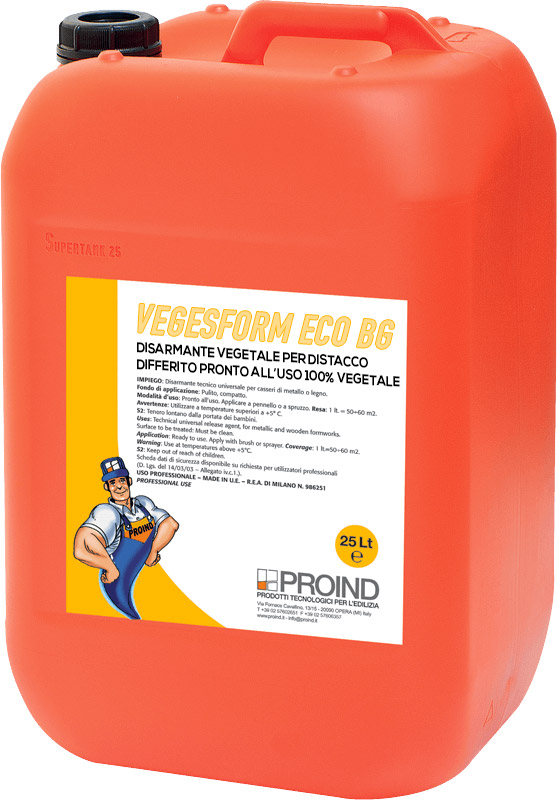
  • Ready-to-use 100% vegetable vegetable release agent for deferred release

    Ready-to-use plant disinfectant for delayed detachment

    VEGESFORM ECO BG is a formwork release agent containing additives that facilitate demoulding and protect formwork.

    Read more
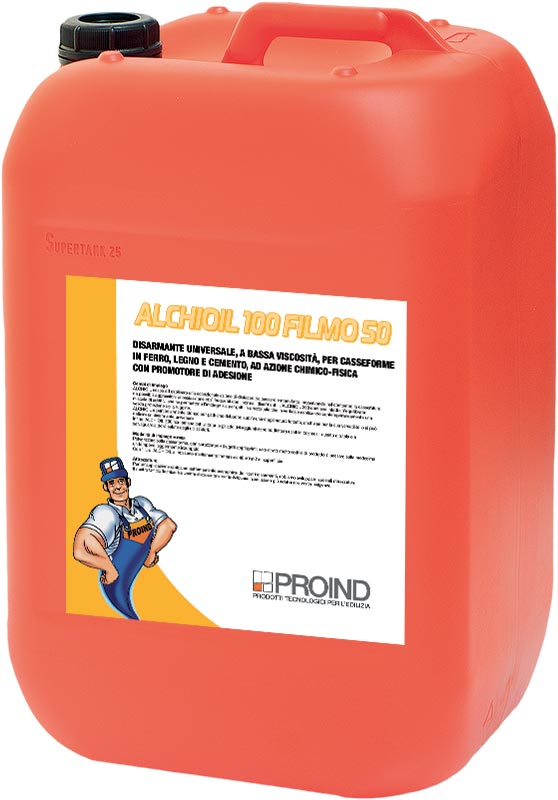
  • ALCHIOIL 100 FILMO 50

    Release agent for all formwork with adhesion promoter

    ALCHIOIL 100 FILMO 50 is a release agent composed of special additives and an adhesion promoter that allows demoulding for vertical and horizontal castings.

    Read more
  • Ready-to-use universal synthetic release agent

    Ready-to-use universal synthetic disarming agent

    ALCHIOIL 200 is a ready-to-use synthetic release agent, specially formulated with additives that act as inhibitors.

    Read more
  • Ready-to-use low viscosity universal release agent

    Ready-to-use universal low-viscosity disarming agent

    ALCHIOIL 400 is a ready-to-use release agent, specially formulated with additives that allow for immediate demoulding.

    Read more
  • VIBROSFORM SF

    Concentrated release agent for quick demoulding

    VIBROSFORM SF is a ready-to-use release agent specially formulated for the rapid demoulding of concrete products.

    Read more
  • RAPIDSFORM FL

    Disarming agent for rapid concrete breaking

    RAPIDSFORM FL is a release agent formulated for the rapid removal of concrete products from moulds, allowing for easy cleaning of the moulds.

    Read more
  • RAPIDSFORM BIO

    Environmentally friendly quick-release disarming device

    RAPIDSFORM BIO is an environmentally friendly form release agent that isolates the formwork and reacts chemically with the concrete to create insulation.

    Read more
  • Release agent for ceramic and clay products

    Disarming for ceramic and clay products

    SFORMACER is a latest-generation release agent particularly suitable for demoulding ceramic or clay products.

    Read more
  • Creamy pre-emulsified release agent

    Pre-emulsified creamy disarming agent

    PRONTOSFORM is a paste-like release agent with excellent adhesion to the walls of vertical formwork, on which it forms a protective film.

    Read more
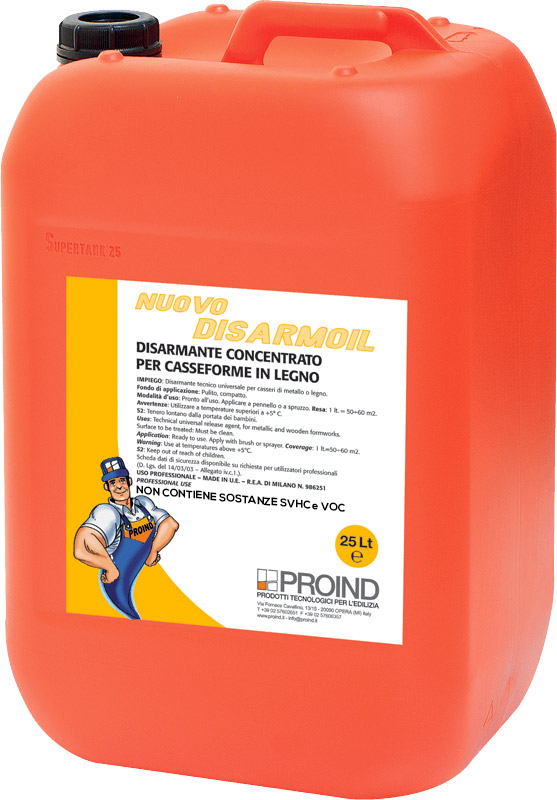
  • Concentrated release agent for wooden formwork

    Concentrated dismoulding agent for wooden formwork

    NUOVO DISARMOIL is a degreaser composed of special synthetic oils and high-quality emulsifiers that does not contain SVHC or VOC substances.

    Read more
Share
0

Related posts

Cemento armato
February 25, 2026

Disarming: essential solutions for efficient, high-quality construction


Dettagli
Precast
February 25, 2026

Precast materials: solutions for high-quality prefabrication


Dettagli
Edilizia green
February 25, 2026

Green building: Proind’s responsible choice


Dettagli

© 2024 PROIND SRL - P.IVA: 04084490152 - All Rights Reserved.
Via Fornace Cavallino 13/15 - 20073 Opera (Milano) - Italy

Tel.: +39.02.57602651 - Fax: + 39.02.5760635 - E-mail: info@proind.it

Privacy

    0English
    • Italian
    • English